S+T+ARTS Hungry EcoCities celebrates the end of its three-year journey!
After three years of collaboration, the European S+T+ARTS Hungry EcoCities programme officially came to an end last February.
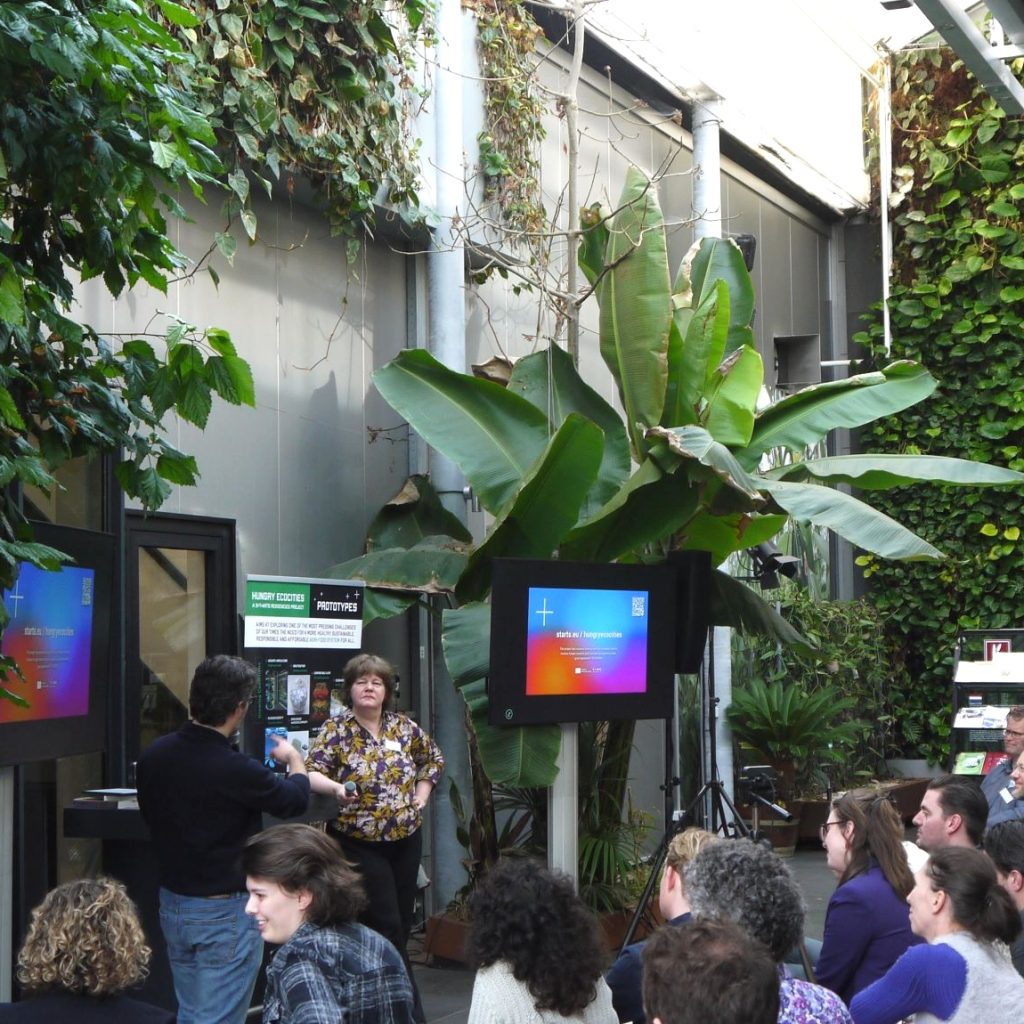
To mark the occasion, more than 80 guests gathered at Koppert Cress for the Grand Gathering. Participants came from a wide range of backgrounds: architecture, art, food production, policy and research. This reflects the diversity that defined the project from the very beginning.
Over the past three years, S+T+ARTS Hungry EcoCities brought together artists, SMEs and universities to explore new perspectives on the future of food systems. What made the programme unique was precisely this combination of disciplines. These communities do not naturally work together, and as Aart van den Bos and Rodolfo Groenewoud van Vliet reflected during the event, collaboration between such different worlds takes time. Time to align, to translate ideas and to understand each other’s language. But once that happens, meaningful value emerges.
Experiencing the Mega Scale in our Food System
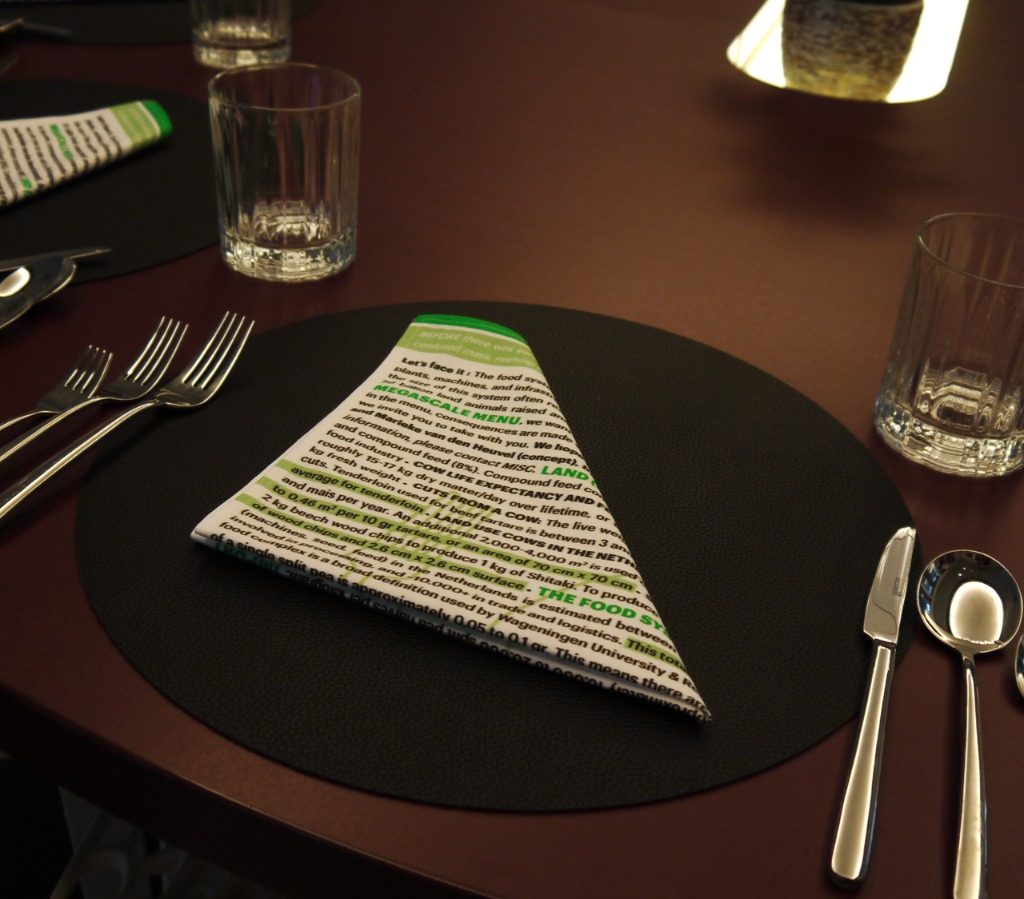
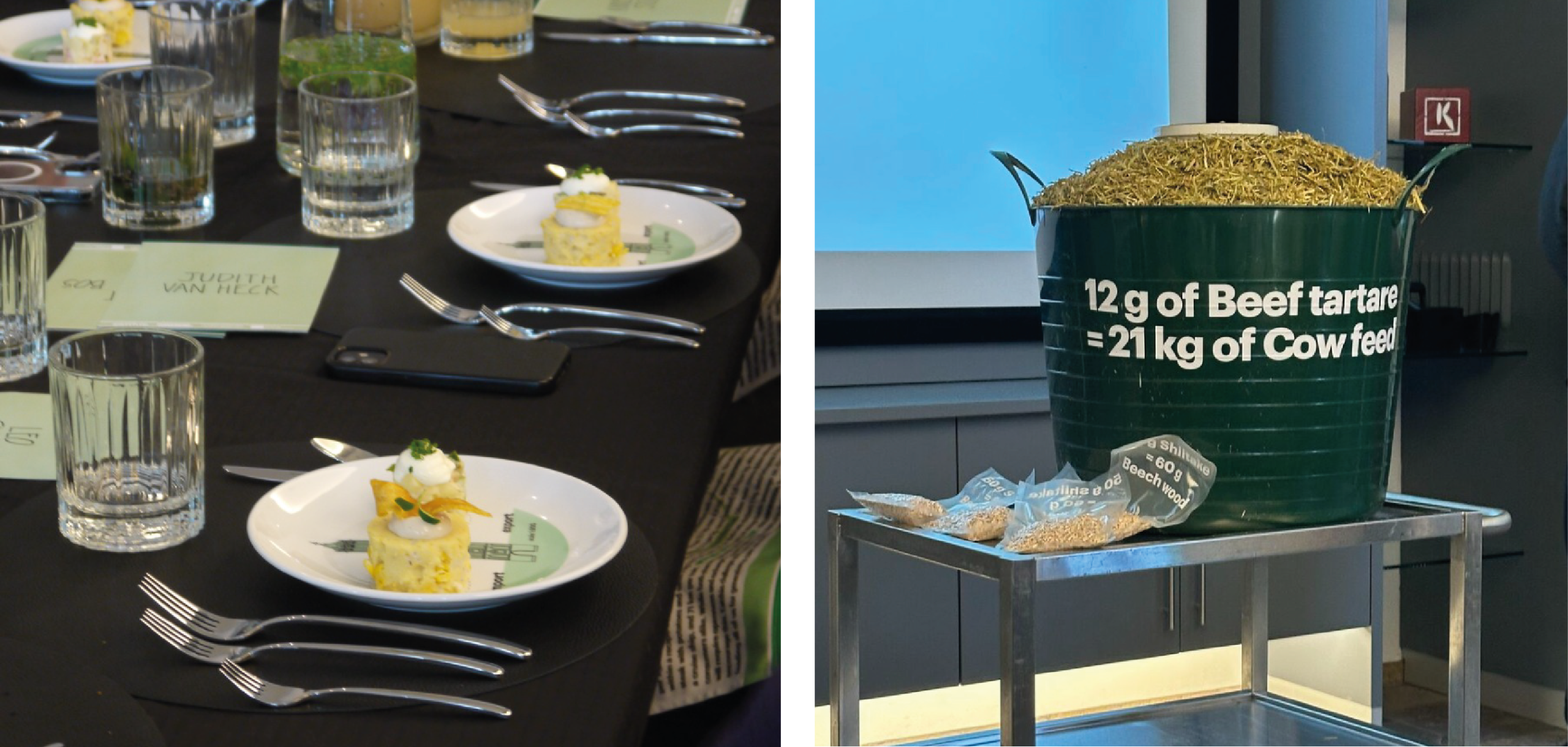
The Grand Gathering opened in the Cressperience at Koppert Cress, where the table was already beautifully set. Menus made us curious and each guest received a napkin that immediately made you pause and think about our food system before the first dish arrived.
This was the Megascale Lunch, developed by EatThis board member Stephan Petermann together with Marieke van den Heuvel and chef Arvid Schmidt.
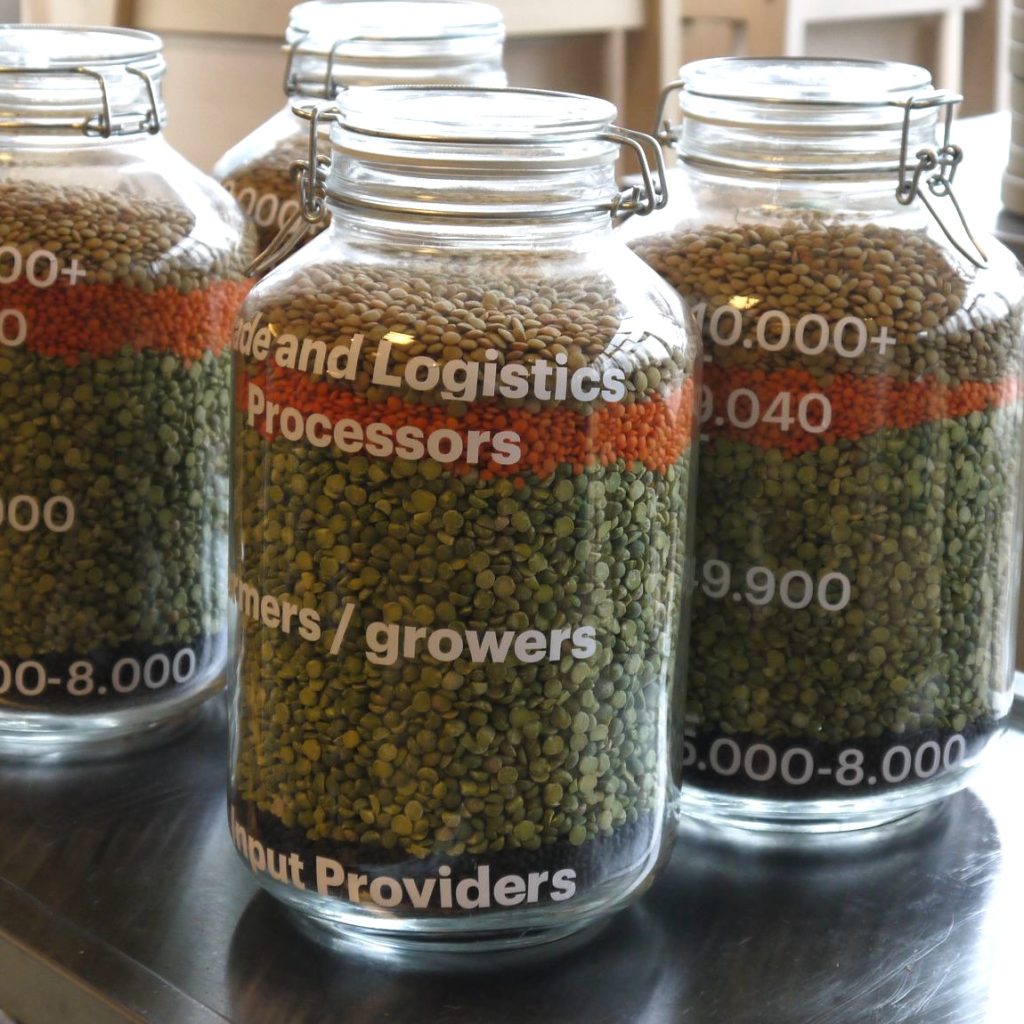
After years of exploring food systems through the Hungry EcoCities programme, Stephan wanted to show something that is often difficult to grasp: the vast scale of the global food system. Approaching the topic from an architectural perspective, the lunch translated large and abstract food system dynamics into tangible experiences at the table.
One of the dishes illustrated the enormous spatial footprint of beef production. Participants learned how vast areas of land and large volumes of feed are required to produce what ultimately becomes a very small portion of meat on our plates.
Other dishes explored the role of the Netherlands in the global food system. The country functions as both a major importer and exporter: importing feed and raw materials while exporting food products across the world. Through the dishes and the stories around them, participants were invited to reflect on how these flows of resources, nutrients and trade shape our food system.
In this way, the lunch became more than a meal, the guests literally experienced the scale and complexity of food. As EatThis, we will work together with Stephan, Marieke and Arvid to bring this Megascale lunch to more tables in the future. If you’re interested to host a lunch or dinner, get in contact with us.
Exploring the project outcomes
The programme continued with a series of in-depth workshops showcasing the outcomes of several S+T+ARTS Hungry EcoCities collaborations. Watch the project results via this link.
Participants joined sessions led by Tomato Brain, Resource Society and Vegetable Vendetta, exploring topics ranging from AI applications in horticulture to AI-generated vegetable videos and resource-efficient production systems in extreme environments. These sessions demonstrated how artistic perspectives, technological innovation and food production can intersect in unexpected and valuable ways. You can click on the links to read more about these art projects that were part of the programme.
A closing reflection from Carolyn Steel
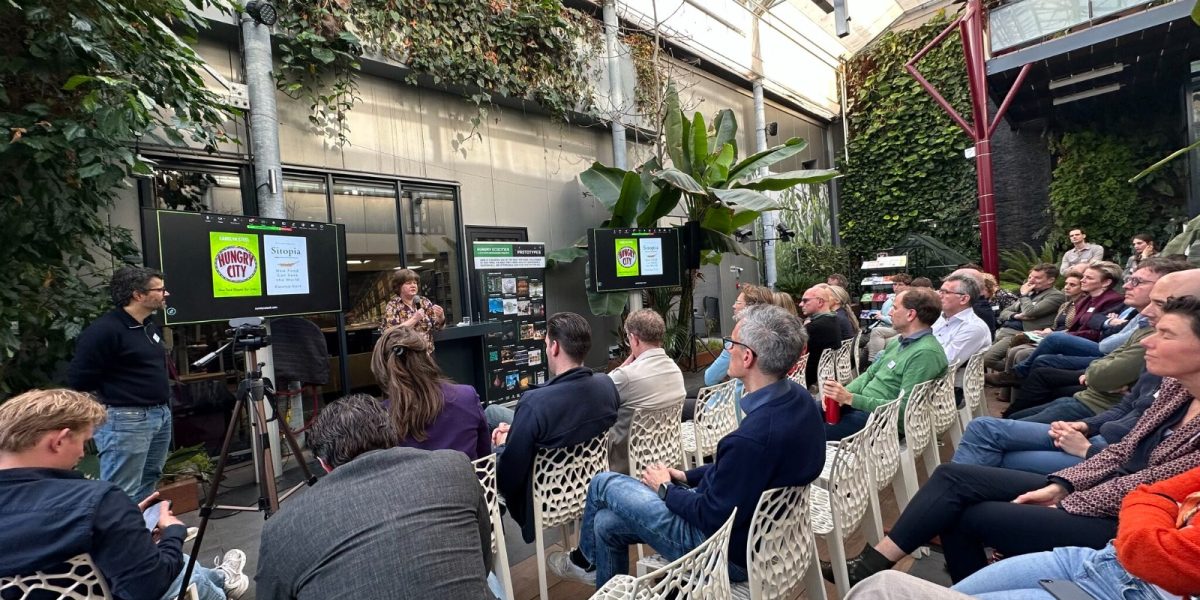
The day concluded with a plenary keynote by Carolyn Steel, architect and best selling author known for her famous work on food-producing cities, such as Sitopia and Hungry City.
Her books and ideas originally inspired the creation of the S+T+ARTS Hungry EcoCities project, making her contribution a fitting closing reflection. For more than an hour and a half, the audience listened closely as she traced the deep relationship between cities and food.
Her message was clear:
- The size and structure of cities have always been shaped by food and transport.
- Modern urban life has distanced people from their food sources.
- Industrial food systems often hide environmental and social costs.
- Moments of crisis tend to reconnect people with local food and communities.
In the end, everything can be traced back to food. Food is the foundation of our existence.
The full keynote has been recorded and can be found back via this link. The evening concluded with a final celebration in the Edible Jungle, marking the official end of the programme.
Looking Ahead
Although Hungry EcoCities has come to an end as a project, the questions it raised remain highly relevant:
- How can we strengthen the connection between cities and their surrounding regions?
- How can technology, nature and design work together in meaningful ways?
- And how can we bring more value back into the food system?
We would like to thank all artists, Studio Other Spaces (sos) Berlin, Carlo Ratti Associati) CRA Turin and all other partners and participants who contributed to the project over the past three years. Your ideas, experiments and collaborations have helped shape an inspiring journey. It was a great pleasure to be part of this incredible group of creatives.